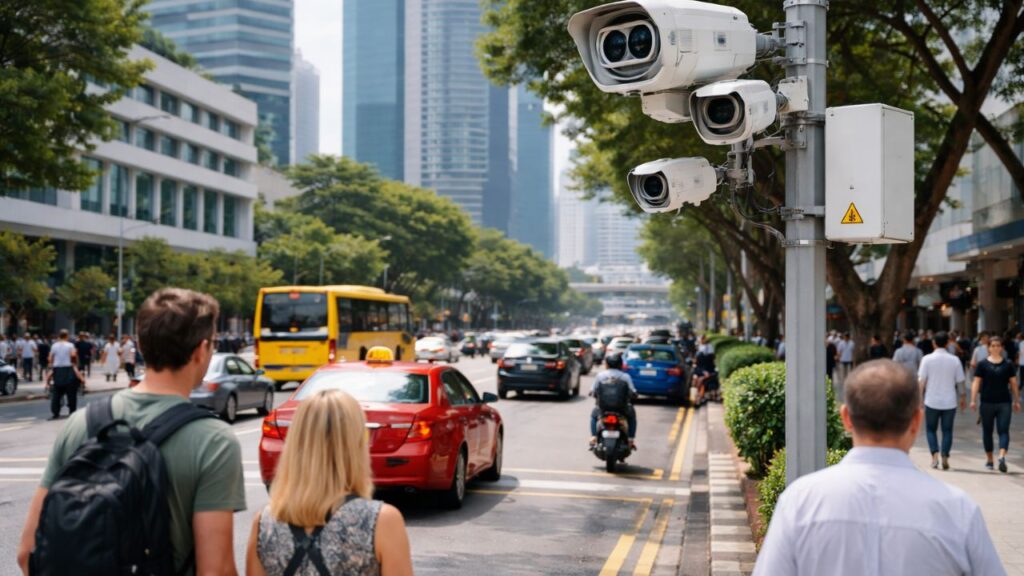
The latest update to Singapore’s traffic laws, which goes into effect on March 28, 2026, will make the country smarter. The country is getting high-tech cameras with AI that can automatically spot violations and issue fines without any help from people. The goal of this change is to make the roads safer, cut down on manual enforcement, and make sure that traffic rules are followed more strictly. As Singapore continues to adopt smart technology drivers need to know how these new systems work and how they will change the way they get to work every day.
Singapore’s AI Traffic Enforcement System in 2026
The new AI traffic enforcement system is a big step forward in how Singapore keeps an eye on how people drive. These cameras can find speeding illegal parking and signal violations in real time, automatically issue fines, and use smart surveillance technology and precise tracking tools. There isn’t much human involvement, which makes enforcement faster and more consistent than with traditional systems. The system works all the time, so violations are caught right away. This upgrade shows that Singapore is serious about keeping the roads safe and using new technology to make traffic law enforcement more accurate and efficient.
How AI Cameras Affect Traffic Fines in Singapore
It is now easy and quick to give out fines thanks to AI cameras. Drivers who break the rules will get punishments right away through instant penalty notifications a digital enforcement system, camera-based monitoring, and automated rule enforcement. This gets rid of delays and cuts down on arguments because the evidence is clear. The system also connects to national databases, which makes sure that vehicles and offenders are correctly identified. Because of this, drivers need to be more careful because even small violations can now be found right away without the need for physical patrol officers.

How the Singapore AI Traffic Update affects drivers
This update is likely to have a big effect on drivers. Drivers must adopt responsible driving habits, follow strict traffic rules, stay aware of ongoing road monitoring, and avoid behaviors that increase the risk of penalties. AI cameras make people think twice about breaking the law, which makes roads safer and leads to fewer accidents. Some drivers might think the system is too strict at first, but in the end, it makes things fair because all violations are treated the same. Over time, this program should help make traffic rules in Singapore more strict.
Summary and What to Expect in the Future
Singapore’s use of AI to enforce traffic laws shows that it is a forward-thinking city. The country is setting a global standard with its tech-driven government safer roads, better control of violations, and infrastructure that is ready for the future. Drivers may need to get used to the system, but its long-term benefits are clear. This is a useful upgrade because it lowers the number of accidents, makes people follow the rules more, and speeds up the process of enforcing the rules. As technology gets better, Singapore may keep improving its systems to make sure that its roads stay among the safest and best-managed in the world.
| Feature | Details |
|---|---|
| Date of Launch | March 28, 2026 |
| What kind of technology was used? | AI-powered cameras |
| Type of detection | automatic violation capture |
| Issuing Fines | Instant digital alert |
Questions and Answers (FAQs)
1. What do AI traffic cameras do the most?
The main goal is to automatically find violations and make the roads safer.
 Singapore Senior Support Payments 2026: Benefits Up to S$3,700 and Eligibility Details Explained
2. When did Singapore’s new system start?
On March 28, 2026, the AI traffic enforcement system went live.
3. How are fines given out in this system?
Digital notifications based on camera evidence send out fines right away.
4. Do drivers need to do anything?
To avoid automatic fines, drivers must strictly follow traffic rules.