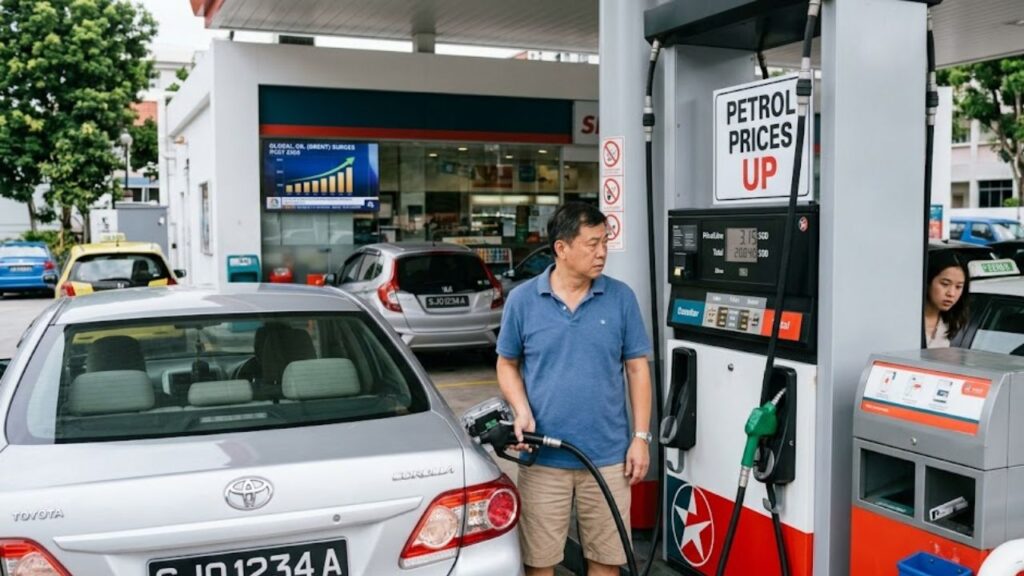
Due to the escalating conflict in the Middle East and rising global oil prices, Singaporeans may soon have to pay more for gasoline and electricity.
Energy analysts caution that ongoing disruptions to LNG and oil supply routes could raise prices in Singapore’s fuel and electricity markets.
| Key Event | Details |
|---|---|
| Oil Price Surge | Brent crude briefly reached US$119.50 per barrel on 9 March 2026 |
| Current Market Level | Oil still trading about 17% higher than last week |
| Risk Scenario | Analysts warn oil could reach US$150 per barrel if conflict expands |
| Major Supply Route | Strait of Hormuz, handling about 20% of global oil trade |
| Key LNG Supplier | Qatar, a major supplier for Singapore |
Why There Is Pressure on the World’s Oil Supply
The most recent spike in oil prices comes after attacks on energy infrastructure in a number of Middle Eastern nations.
 S$1,300 Support Payout 2026 Singapore: Eligibility Criteria, Payment Dates And Benefits Explained
There have reportedly been attacks on facilities in Bahrain, Kuwait, Qatar, Saudi Arabia, and the United Arab Emirates. Iran’s oil infrastructure has also been targeted by Israel.
Energy shipments across the Strait of Hormuz, a small maritime route that connects the Persian Gulf to international markets, have been hampered by these attacks.
This route handles about 290 million cubic meters of LNG and 15 million barrels of crude oil every day.
Ships passing through the waterway are now more vulnerable to security risks. In recent weeks, numerous attacks on vessels have been reported by maritime agencies.
Effect on Petrol Prices in Singapore
Retailers in Singapore update their gas prices every day using the Mean of Platts Singapore (MOPS) benchmark.
The price of refined fuels like gasoline and diesel usually increases in tandem with a significant increase in global crude prices.
Therefore, if high oil prices persist in the upcoming weeks, consumers may see increases at nearby gas stations.
Fuel prices in the region may be further impacted by China’s recent decision to temporarily halt some refined fuel exports, which could also tighten supply throughout Asia.
Prices for electricity may also be impacted.
Natural gas, which is mostly imported, is used by Singapore to produce the majority of its electricity.
 SG60 Senior Voucher Expiry Date 2026: Eligibility Rules, Redemption Process And Claim Deadline
The Ras Laffan LNG facility in Qatar, a significant export terminal that recently declared force majeure after an attack interfered with operations, is one area of concern.
Singapore’s power generation costs may increase if LNG shipments are still restricted, which could eventually affect electricity prices.
Why This Is Important
This means that changes in international geopolitics, particularly those that impact large oil and gas exporters, can have an immediate impact on domestic fuel and electricity prices.
To mitigate short-term shocks, the government usually uses reserves and policy tools. Long-term disruptions in the Middle East, however, may still cause prices for homes and businesses to rise.
If the situation persists, consumers might want to keep a careful eye on fuel prices and energy consumption.
FAQ:
Why are Singapore’s gas prices going up?
Global oil benchmarks are connected to petrol prices. Fuel prices are rising globally as a result of the recent spike in Brent crude prices brought on by the Middle East conflict.
What impact does the Strait of Hormuz have on Singapore?
Approximately one-fifth of the world’s oil shipments and substantial LNG exports pass through the Strait of Hormuz. There, disruptions may lower supply and raise prices.
Could the cost of electricity go up?
Maybe. Higher LNG prices may eventually have an impact on power costs because natural gas is the primary source of electricity in Singapore.
How much could the price of oil rise?
According to some analysts, oil prices could hit $150 per barrel if the conflict intensifies.