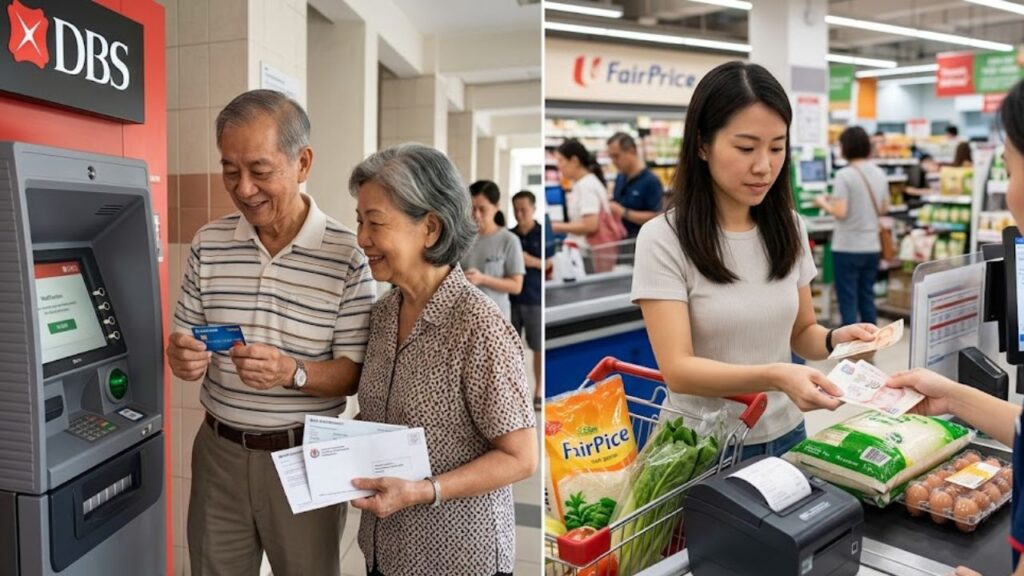
Singapore’s Budget 2026 introduces multiple financial assistance measures aimed at helping citizens manage rising living costs. These initiatives include direct cash payouts, household vouchers, and utility rebates designed to reduce everyday expenses for families. With inflation affecting groceries, utilities, and transportation, the government has expanded targeted support programmes to ensure households receive timely relief. Many Singapore residents are currently reviewing eligibility rules, payout estimates, and distribution schedules to understand how much support they may receive during the year. The assistance forms part of a broader national strategy that focuses on protecting purchasing power while maintaining economic stability.
| Support Component | Estimated Amount / Details | Expected Timeline |
|---|---|---|
| Cash Payout | Up to S$800 depending on income level | Payments rolled out across 2026 |
| Middle-Income Support | Approximately S$400 – S$600 | Possible mid-year distribution |
| CDC Vouchers | Hundreds of dollars per household | Issued at different times during the year |
| Utility Rebates (U-Save) | Quarterly rebates for eligible HDB households | Provided throughout 2026 |
Understanding the Singapore Budget Cash Payout
The Budget cash payout is a direct financial support initiative introduced by the Singapore Government to help citizens cope with higher everyday expenses. It is usually delivered as part of broader support packages announced during the national budget. These programmes combine multiple forms of assistance such as direct payments, vouchers, and rebates that help reduce household costs. The goal is to ensure that families can better manage essential spending on groceries, utilities, housing, and healthcare services. By combining several support measures, the government aims to provide meaningful financial relief to households while strengthening economic resilience during periods of rising costs.
Estimated Cash Payout Amounts by Income Group
The final payout amount for each recipient generally depends on income level and property ownership status. Individuals with lower incomes typically qualify for higher financial assistance because they are more vulnerable to increases in living costs. Middle-income households may receive moderate support, while higher-income earners may receive smaller payments or may not qualify depending on policy guidelines.

| Income Group | Estimated Cash Payout |
|---|---|
| Lower-income households | Up to S$800 |
| Middle-income households | Approximately S$400 – S$600 |
| Higher-income households | Lower amount or may not qualify |
Eligibility Criteria for Singapore Budget 2026 Support
Eligibility for government payouts in Singapore usually follows several key requirements. The most important factor is Singapore citizenship, as most direct payouts are limited to citizens. Another major factor is assessable income based on recent tax records. Individuals with lower income levels generally receive higher levels of support. Property ownership can also influence eligibility because citizens who own multiple properties may receive smaller payouts or may not qualify for certain benefits. In some cases, additional assistance may be provided to seniors, low-income households, or families supporting dependants.
Expected Payment Timeline for Budget 2026 Payouts
The exact payment schedule is normally confirmed after the official Budget announcement and implementation plans are finalized. However, payouts are usually distributed in several phases throughout the year so that financial assistance reaches households at different times when support is needed.

| Phase | Expected Timing |
|---|---|
| Initial payout phase | Shortly after the Budget announcement |
| Mid-year support payment | Approximately mid-2026 |
| Additional support phase | Later in the year if further assistance is provided |
How Citizens Receive Their Budget Cash Payout
The Singapore Government distributes financial support through secure and efficient digital payment systems. The fastest method is PayNow linked to a citizen’s NRIC, which allows funds to be transferred directly to a bank account. Individuals who previously registered their bank details with government agencies may receive payments through standard bank transfers. For citizens without bank accounts, the GovCash system allows recipients to collect their payouts at authorised collection outlets. These digital systems help ensure that financial assistance reaches eligible residents quickly and securely.
Additional Budget 2026 Support Schemes
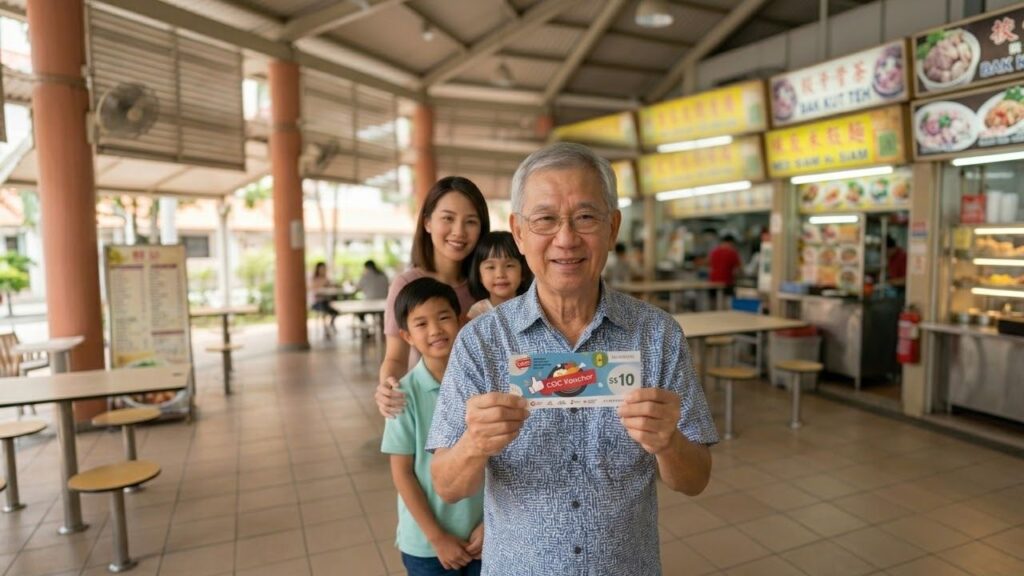
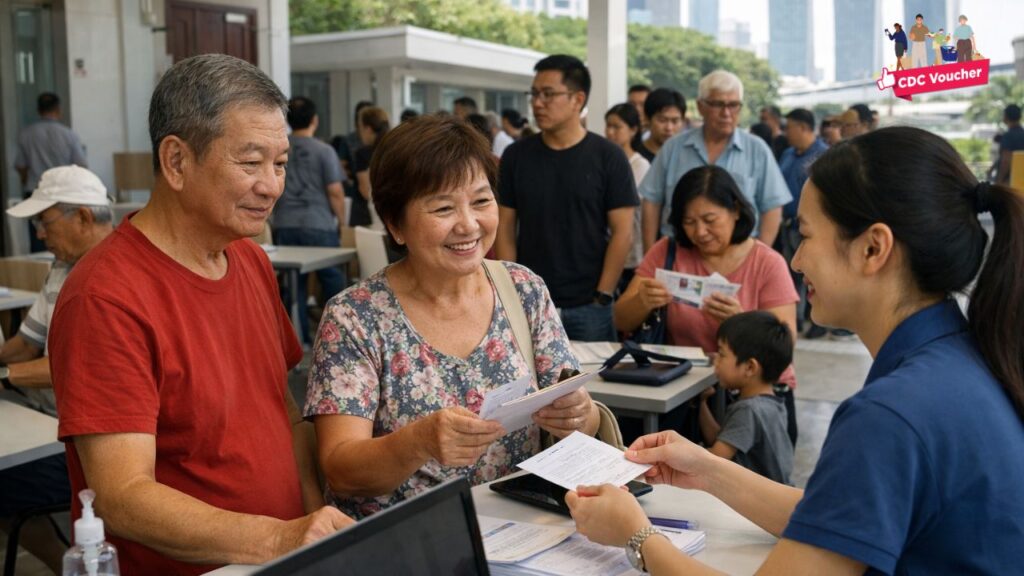
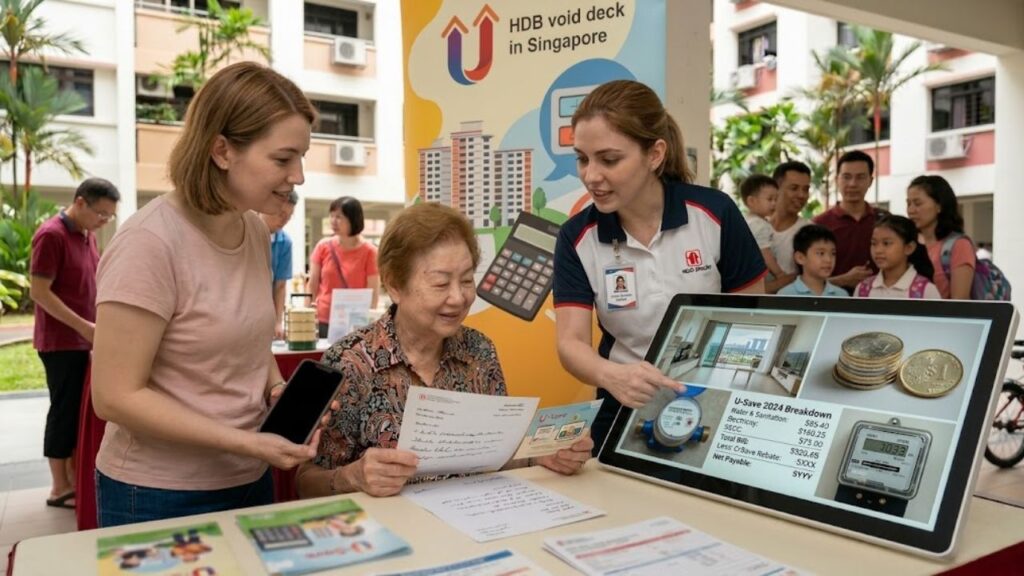
Besides direct cash payouts, Budget 2026 may also include several other assistance programmes designed to reduce everyday living costs for households. CDC vouchers may be issued to families and can be used at participating hawker centres, neighbourhood shops, and supermarkets. U-Save rebates help eligible HDB households reduce their electricity and water bills through quarterly credits. Residents may also receive Service and Conservancy Charges rebates that help cover part of their town council maintenance fees. Seniors may benefit from additional healthcare subsidies, special support vouchers, and retirement-related assistance programmes.
Why Budget Support Is Important for Households
Singapore’s fiscal support policies aim to protect citizens from the financial pressure created by rising prices while maintaining long-term economic stability. Direct payouts, vouchers, and rebates help families manage essential spending during periods of inflation. These measures strengthen household purchasing power and provide targeted assistance to seniors, lower-income residents, and families facing higher daily costs. By combining multiple forms of support, the government ensures that financial aid reaches those who need it most while supporting overall economic resilience.