When life feels relentless, giving up can seem like the easiest option—but compassion often becomes the quiet strength that keeps us grounded. These 13 stories reveal how people chose kindness in the harshest moments, showing that empathy can endure even under immense pressure.
On a night train, a homeless man sat silently while others avoided him. A businesswoman noticed he was freezing and offered her spare scarf, sparking a conversation. He shared how an injury had cost him his job, and she listened without judgment. At the next station, she returned with food and a prepaid travel card, telling him to pass the kindness on someday. Before leaving, she also gave him a job contact. Months later, he was seen again—employed, composed, and still carrying that scarf. One hour of care had altered his path.
Why People Seem More Difficult With Age: It’s Not New Flaws, It’s Less Self-Control
Growing up, my younger brother depended heavily on me, which built resentment over time. Distance in adulthood only widened the gap between us. Years later, he faced a difficult custody battle that drained him emotionally and financially. Despite everything, I stepped in—organizing paperwork, attending hearings, and taking unpaid leave. My job was at risk, but I continued because he needed support. After months of effort, he secured stability. Only then did he admit he couldn’t have managed alone. That experience reshaped our relationship, replacing years of frustration with quiet understanding.

At sixteen, I was failing school and hiding my mother’s repeated hospitalizations. I worked evenings just to eat. One night, I fainted from exhaustion on a staircase. A passerby dismissed me as attention-seeking, adding to my humiliation. Then a woman rushed down, gave me water and snacks, and stayed until I recovered. Later, she helped me connect with a social worker. That moment changed how I viewed strangers forever.
My mother always favored my sister, something I carried with me into adulthood. When our mother became seriously ill, my sister initially withdrew, unable to cope. I took on caregiving responsibilities despite old resentment. Eventually, my sister returned, rearranging her life to share the burden. She admitted fear had held her back. Working together without revisiting the past brought balance to our relationship. Her actions didn’t erase history, but they reshaped our future.
Research suggests the 1960s and 70s produced adults who could self-soothe, entertain themselves, and tolerate boredom – not because their parents were wise but because their parents were simply elsewhere
A widowed grandmother raising three children struggled through a heatwave after her air conditioner broke. She tried to manage with improvised solutions until neighbors quietly came together. They repaired wiring, installed a new unit, and cleaned her apartment while she was away, presenting it as a routine upgrade. She later acknowledged she understood the truth but appreciated their sensitivity. Afterward, the building felt more connected, as small acts of care strengthened the community.
While caring for my sick father, I was also dealing with personal struggles I kept hidden. Exhaustion built up until one morning I broke down on a crowded bus. People looked away, unsure how to respond. A young man nearby offered me headphones and played calming music. He didn’t ask questions or offer advice—he simply shared a quiet moment. That silent support helped me regain control. Sometimes, kindness is just allowing someone space to exist without judgment.
My stepbrother and I spent years competing over perceived favoritism in our family. As adults, we barely stayed in touch. When my partner faced a medical emergency, he stepped in without being asked—handling errands, repairs, and daily responsibilities. He used vacation days he had saved for himself, never mentioning the sacrifice. His steady presence helped me focus on what mattered. That experience quietly repaired our relationship, replacing rivalry with trust.
Trains suspended on Day 2 of free transport
 10 Workplace Kindness Acts Showing Optimism And Compassion Transform Everyday Professional Life
In a hospital waiting room, a single mother sat alone while her toddler prepared for surgery. A nurse noticed she hadn’t eaten and brought her food, even though it went against policy. When insurance complications threatened delays, the nurse spent her break resolving them. She told the mother to focus on her child while she handled everything else. She even stayed beyond her shift to ensure the surgery went smoothly. Her effort went unnoticed by most—but meant everything to that family.
After leaving an abusive relationship, I arrived at a shelter carrying everything I owned. Another resident mocked me, suggesting I deserved what happened. I nearly walked away. A volunteer stepped in immediately, offering reassurance and helping with paperwork. Later, she quietly provided extra blankets. That night, for the first time in a long while, I cried from relief rather than fear.
Following a financial dispute, my parents and I barely spoke for two years. During that time, my small business struggled. One day, a supplier offered unexpectedly flexible payment terms. I later learned my mother had guaranteed part of the agreement with her own savings. She never mentioned it, avoiding further conflict. That act of silent support gave me time to recover and slowly rebuild our relationship.
A retired teacher who fed stray cats noticed a teenage girl lingering nearby. The girl admitted she avoided home due to constant conflict. The teacher began inviting her to study together, later offering temporary housing during exams. She framed it as simple support, nothing more. Months later, the girl earned a scholarship and publicly thanked her. The teacher later said she only provided “quiet,” but that was enough to change a life.
At 79, I survived mostly on tea because my pension barely covered rent. Hunger became routine, but pride kept me from asking for help. At the market, I struggled to pay for groceries. A woman behind me quietly covered the remaining amount, sharing a brief story about her grandfather. That small act allowed me to eat properly for the first time in weeks. That day, kindness felt more nourishing than the food itself.
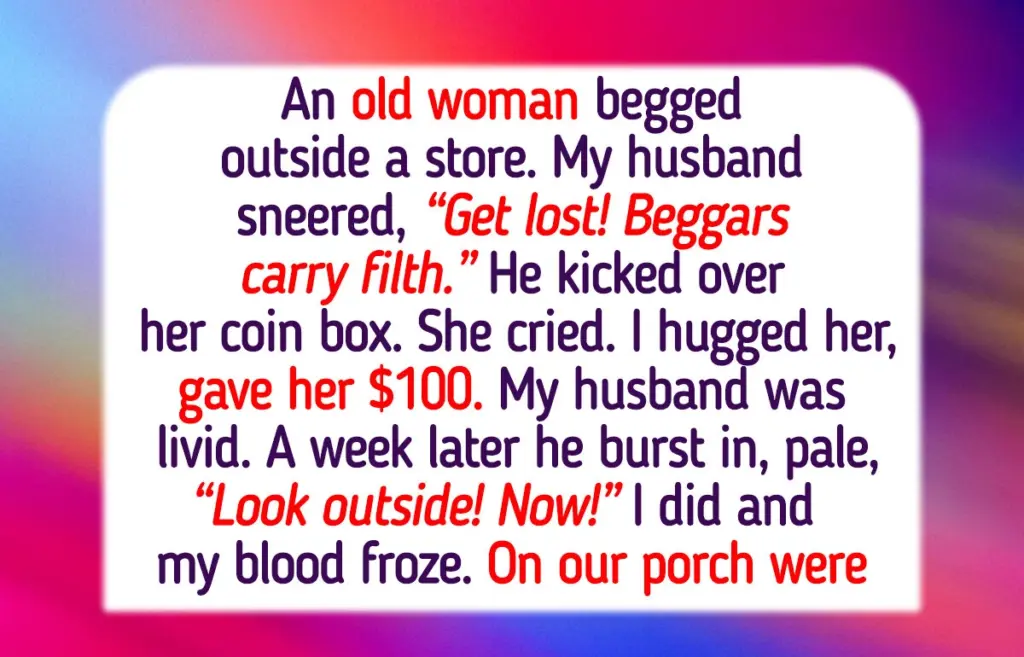
Outside a store, an elderly woman begged for help. My husband reacted harshly, knocking over her coins. I comforted her and gave her money. A week later, a painting appeared on our porch, depicting a meaningful moment from our past. What stood out most was how she portrayed my husband—not as he had acted, but as someone kind and compassionate. She had used the money to buy art supplies, transforming a painful encounter into something hopeful. That gesture humbled him in a way words never could.
Life often creates fractures where we least expect them—but kindness has a way of reaching into those spaces. These stories show how empathy, compassion, and quiet generosity help people heal, rebuild trust, and move forward, even when circumstances seem impossible to repair.